2017 in review: 5 stories that shaped the sporting year
LA and Paris get their Games amid IOC bid struggles
On the one hand, the next three summer editions of the Olympic Games will be held in a diverse trio of world class cities. On the other, every bidder to reach the finish line for the 2024 event was rewarded with a prize of their own.
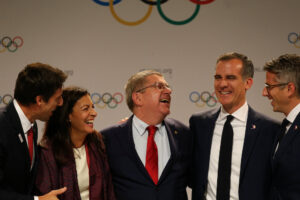
The International Olympic Committee (IOC) parked the question of dwindling interest in its biggest event in 2017 by creating what president Thomas Bach called a “win-win-win situation”, engineering a tripartite deal to make third-time hosts of Paris in 2024 and Los Angeles in 2028.
Still, the February departure of Budapest from an already disintegrating race highlighted problems that the IOC will need to heal in the years ahead: the Hungarian capital’s enthusiastic and promising campaign had hoped to show a route back in for mid-sized cities but withdrew after shedding local political support in the face of a referendum.
Now, after a challenging build-up to PyeongChang 2018 and anaemic interest in the 2022 event that went to Beijing, thoughts turn to rejuvenating the Winter Olympics. The IOC knows how damaging stories of Sochi’s freewheeling budget were to the appetite for the ice and snow event and is trumpeting a more collaborative bid process.
Sion is the closest to showing its hand for 2026 but there are no candidates yet; former host Innsbruck is already precluded by an October referendum. EC
Formula One begins Liberty era
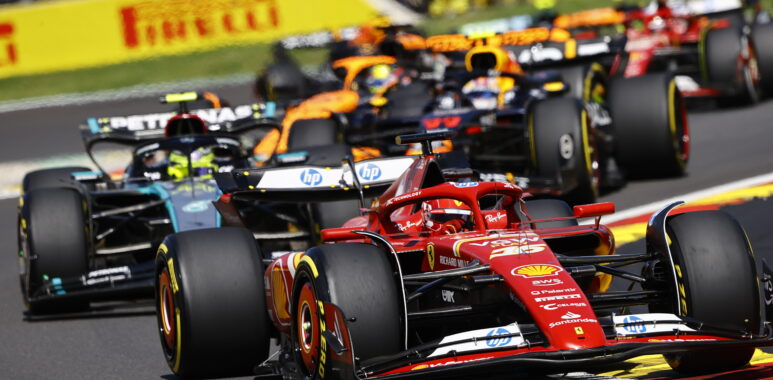
For all its apparent struggles over the past decade or so, Formula One remains a bona fide top-tier sport; one of the few global series which not only transcends geographical boundaries but cultural ones, possessing genuine mainstream crossover appeal. Not many sporting properties would change hands for a fee in excess of US$8 billion, as Formula One did at the beginning of 2017 when Liberty Media finally completed its prolonged purchase.
The 40-year reign of Bernie Ecclestone – a man credited in equal measure with driving the sport forward and, in his later years, acting as a human handbrake – came to an end. Almost immediately, Liberty went about liberating Formula One.
A new senior team was introduced alongside new chief executive Chase Carey, most prominently former ESPN executive Sean Bratches as commercial director and industry veteran Ross Brawn as director of motorsport, bringing a balance between the sport’s past and its future.
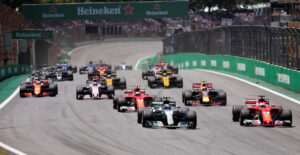
New races were announced, too, with the Malaysian Grand Prix making way for the return of France and Germany in an expanded calendar for 2018. Others were mooted for inclusion further down the line, with street circuits in Copenhagen and Amsterdam rumoured, while significant growth in China and the potential for additional stages there remain high up Liberty’s agenda.
A new logo followed at the end of a season in which Mercedes’ Lewis Hamilton claimed a fourth world title. Bratches’ broadcast background will eventually come to bear, too, with the likely introduction of a dedicated global OTT streaming platform in 2018 – a significant indicator of the digitally led, multimedia future Liberty has envisioned for motorsport’s elite series. AN
IAAF looks to future as Bolt retires
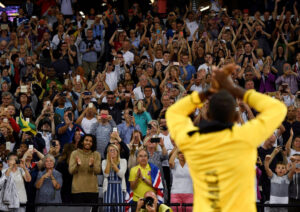
Usain Bolt would have played out the fairytale farewell thousands of times in his head, but none of those envisaged scenarios would have ended with him losing his 100m world title to the twice-banned Justin Gatlin at the scene of his 2012 Olympic triumph. The Jamaican sprint king’s final individual race was a reminder that in sport – and particularly athletics – the crowd favourite doesn’t always win and victory is sometimes impure.
The IAAF, athletics’ global governing body, had decorated London 2017 posters with images of the man who has spent the last nine years defying the stopwatch, but was left with the portrait of a new champion who has spent longer defying doping laws. It was the latest blow to a sport that has suffered from a chronic credibility shortage for decades, and Sebastian Coe, president of the IAAF, admitted he was not “eulogistic” over the American’s victory.
But for all that, London 2017 and its record-breaking attendances gave athletics a kiss of life. Having spent the majority of his tenure trying to combat issues surrounding corruption and doping, Coe is now calling for a major overhaul of the sport. Insisting that “nothing is off the table”, the 61-year-old is considering NFL-style drafts, athlete auctions, franchises and pop-up tracks among a host of other radical proposals to modernise athletics.
The summer of 2017 might have seen one of sport’s greatest ever entertainers take his final bow, but with Bolt’s departure it seems that the race for athletics to remain relevant has only just begun. SC
European soccer transfer market goes wild
After 2016’s transfer splurges, it seemed soccer’s spending bubble must surely burst – but 2017 was a summer of record-smashing financial exuberance as new TV deals came on stream and generous benefactors returned to the market.
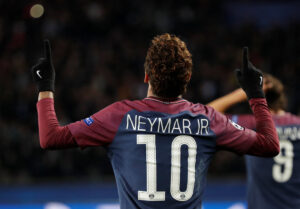
In Europe, Ligue 1 side Paris Saint-Germain met the €222 million (US$259 million) buyout clause in Brazilian star Neymar’s contract at Barcelona. The deal was a statement of intent by the Qatari owners of the recently deposed French champions, easily surpassing Paul Pogba’s world record US$116 million move from Juventus back to Premier League outfit Manchester United in 2016. Teenage sensation Kylian Mbappé joined Neymar and company from Monaco, with the clubs brokering a one-year loan with a permanent transfer worth up to a reported €180 million (US$214.7 million) to come in 2018.
English clubs continued to enjoy unrivalled purchasing power, however, smashing their summer spending record for the seventh consecutive year with deals totalling a combined US$1.8 billion. Abu Dhabi-backed Manchester City spent US$287 million to put the final pieces of their all-conquering side in place.
Javier Tebas, president of Spain’s La Liga, was among those to protest this inflated outlay, demanding an inquiry by European confederation Uefa into breaches by PSG and City of Financial Fair Play (FFP) rules, which limit clubs from spending more than they earn on soccer activities. Uefa rejected calls to look into City’s spending, but investigations into PSG are ongoing.
With Tebas accusing the sides of using “state aid”, creating an “inflationary spiral harmful to European competitions and the footballing industry” – and colourfully telling September’s Soccerex Global Convention that PSG and Neymar had been caught “peeing in the swimming pool” – it remains to be seen whether action will be needed or taken to deal with ‘financial doping’. Otherwise, with broadcast revenues expected to rise further, soccer’s spending seems set to carry on unchecked. EH
Joshua emerges as heavyweights resume centre stage
If there was one night in the year that came closest to capturing all of the glory that sport can sometimes promise, it was at London’s Wembley Stadium late in April.
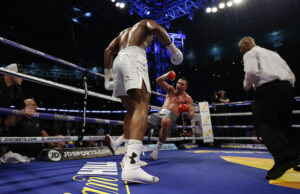
In one corner of a boxing ring at the home of English soccer stood Anthony Joshua, a local boy restored from adolescent misdemeanour to Olympic gold, powerful and finely honed but delivered way ahead of schedule to the defining moment of his young career. In the other stood Wladimir Klitschko, long-time custodian and emblem of a stagnant heavyweight division, hoping to serve reminder of his relevance at the age of 41.
Even amid the excitement that followed an immaculate promotion there was little sense of what the two men would produce. Klitschko, returning after a bizarre surrender of his world titles to the underestimated Tyson Fury in 2015, turned in a limber and menacing performance, among the best of his two-decade career. But in a stirring, seesawing encounter that saw both men on the canvas, Joshua recovered from a mid-fight wobble to stop his Ukrainian idol in the 11th round.
It was a contest that confirmed Joshua as a superstar and made fans dare to dream that heavyweight boxing could be great again. Reality has since settled in: beyond fellow knockout artist Deontay Wilder of the US and the troubled, inactive Fury, there are few compelling opponents for Joshua’s team and promoter Eddie Hearn to line up as they plan a global assault. There will be nights, too, like the one that yielded a laboured win over late substitute Carlos Takam in October.
Still, between the presence of a marketing magnet among the big men and a growing appreciation of the value of proper match-ups, fight fans have cause to be excited again. EC